Toronto and Region Conservation Authority Challenge Kit
This environmentally focused Challenge Kit turns climate change from an overwhelming abstraction into something students can investigate and influence. That sense of agency replaces helplessness with purpose, showing students that while no one person can solve the climate crisis alone, meaningful change can happen. This resource was created in 2021.
“Connecting with the Land and understanding our innate interrelationships and interdependence within ecological webs are foundational to well-being. This also grows humans better equipped to solve real-world ecological challenges and protect living systems, encountered through specific, local, and loved places. Intentionally nurturing these capacities has never been more important.”
- Dr. Maria Vamvalis, Director at Critical Thinking Consortium and Founder, Anayennisi
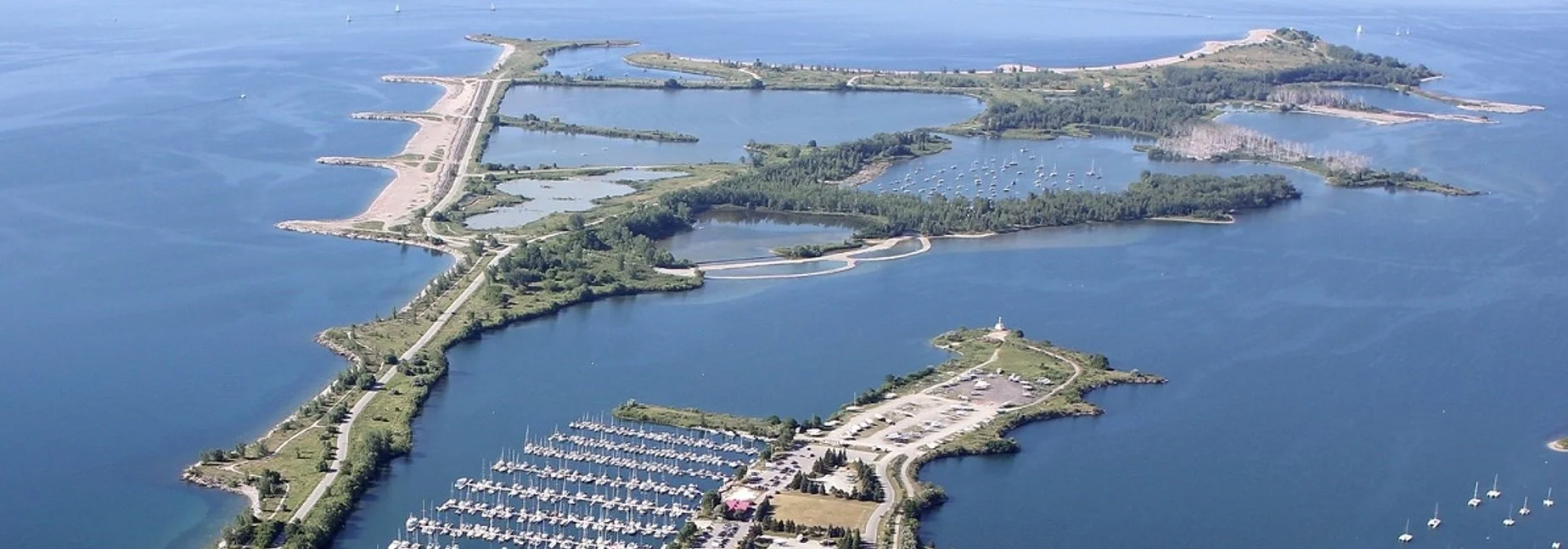
The Great Lakes Challenge Kit asks students the question: How might we help the Toronto and Region Conservation Authority make Tommy Thompson Park a source of environmental stewardship for the Great Lakes? The resource is curriculum connected for grades 6-10 and is an opportunity for students to examine their, and communities’, relationship with the Great Lakes. Tommy Thompson Park is a place that can help people learn how to think and act like an environmental steward.
Through the Toronto and Region Conservation Authority’s programming at Tommy Thompson Park, visitors can help with planting seedlings, shoreline clean ups and removing invasive species.
We need visitors to be inspired to continue to care for the environment even after they leave the park. Every single day our actions have an effect on the Great Lakes, because the water we use in our homes all lead there. Everything that goes down the drain, like microbeads in some of our shampoo, kitchen cleaners, and chemicals in our urine, ends up in Lake Ontario. We see Tommy Thompson Park as a unique place that can spark changes in how people think and behave outside of the park.
Connect with the Toronto and Region Conservation Authority
The TRCA has incredible opportunities for classrooms, including visiting Tommy Thompson Park as a field trip. Visit their Programs for Teachers and Schools website and their Tommy Thompson Park website.
Raja and Jasmine from the TRCA give feedback to students on their thinking and recommendations in February 2022.
Access this Challenge Kit
This Challenge Kit includes:
Facilitator Notebook
Letter to Students
Teacher Slide Deck
Capture Your Thinking Handout
List of classroom resources
Inquiry-Based Activity
And video resources to launch the challenge
Videos → | This Challenge Kit features a video to launch the challenge with the TRCA, a video about the TRCA and a conversation with Water Keeper Tracey Whiteye, hosted by Maria Vamvalis.

Learn more about the
Toronto and Region Conservation Authority →
Since 1957, Toronto and Region Conservation Authority (TRCA), as enabled through the provincial Conservation Authorities Act, has taken action to enhance our region’s natural environment and protect our land, water and communities from the impacts of flooding and increasingly extreme weather events — Ontario’s leading cause of public emergencies.
As the region’s first line of defence against natural hazards, TRCA maintains vital infrastructure and provides programs and services that promote public health and safety, protecting people and property.
TRCA mobilizes a science-based approach to provide sound policy advice, leveraging its position as a not-for-profit operating in the broader public sector to achieve collective impacts within our communities and across all levels of government.
TRCA’s jurisdiction includes nine watersheds and their Lake Ontario shorelines:
Carruthers Creek
Don River
Duffins Creek
Etobicoke Creek
Highland Creek
Humber River
Mimico Creek
Petticoat Creek
Rouge River