Artificial Intelligence Challenge Kit
Equip your students with the skills, knowledge, and tools they need to be responsible, ethical creators and users of AI as they explore the future of learning in a world shaped by Artificial Intelligence. This resource was launched in 2022, with updates since.


"We have yet to understand the profound impact AI will have on student learning. This is one of few programs I've found that encourages students to critically engage with artificial intelligence and consider the ways it will affect their ability to develop rich internal mindscapes. As we continue to grapple with the implications of AI in our classrooms, programs like I-Think’s AI Challenge Kit will become essential."
- Timothy King, Cyber Education & Deeptech Specialist, Information and Communications Technology Council
Building Critical AI Thinkers and Creators
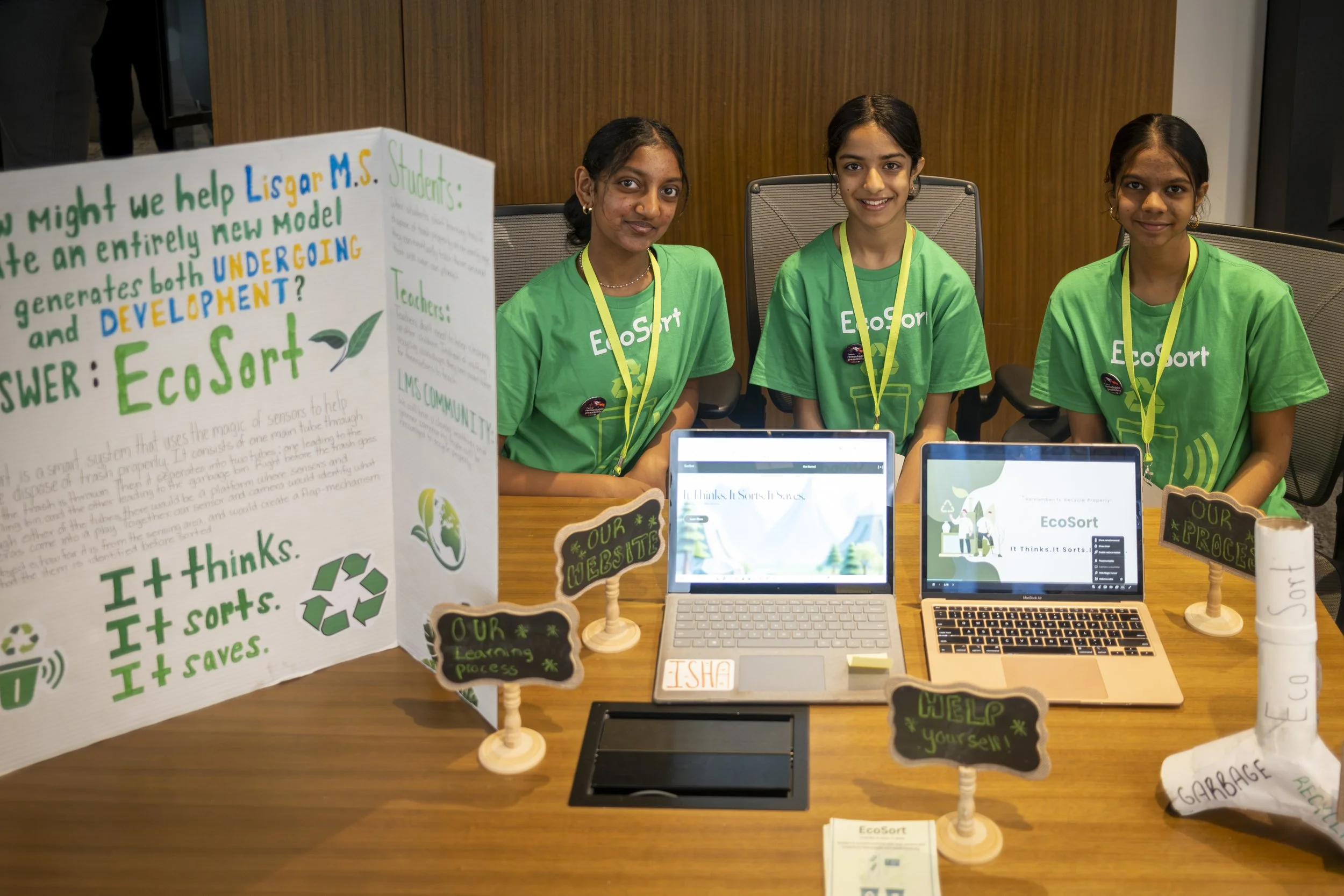
Over 5,000 students have engaged in deep learning about Artificial Intelligence through I-Think’s Artificial Intelligence Challenge Kit. Students and teachers share that understanding how AI works, is trained, used and misused, is essential to the world they live in. Students are asking for meaningful opportunities to sharpen their critical thinking and develop their own points of view on AI.
In the AI Challenge Kit, students build knowledge and understanding of AI by learning directly from expert speakers from around the world. They are introduced to emerging career opportunities, connect what they hear to current news stories, and sharpen their critical thinking. Using the Challenge Kits, students engage in curriculum-connected hands-on activities and live demos, that make learning tangible and relevant, grounded in 3 themes:
Deeply Human
AI must serve people first. Because it isn’t human, and lacks feelings and judgment, we have to use it in ways that protect one another, avoid harm and promote flourishing.
Critical Thinking
AI surfaces “most probable” answers from big datasets; we keep agency by thinking critically. That means understanding how AI is built and how misinformation, deepfakes and other harmful aspects spread, so we can evaluate outputs and make informed choices.
Enhancing Learning
AI should open new opportunities for learning, not replace the learning and skill building we still need to do. We need to uphold academic integrity and make learning safe and accessible for every student.
Learn more about the AI Challenge Kit from its designer, Heidi Siwak

Student Voice Report
In a world buzzing with AI hype, this Challenge Kit cuts through the noise to focus on what truly matters: how AI can meaningfully support the learning needs of all students. We’re excited to share our AI Report, inspired by the problem solving of over 5,000 students across Ontario, which echoes leading international research. Use it to lead thoughtful discussions with staff and students, to ensure AI serves the growth and success of every student.
Access this Challenge Kit
This Challenge Kit includes:
Facilitator Notebook
Letter to Students
Teacher Slide Deck
Capture Your Thinking Handout
And inquiry-based activities to ignite curiosity
There are 3 sets of resources with this Kit. Mix and match the resources to engage students in deep thinking and problem solving.
1. Inquiry-Based Activities (in ZIP file)
The 8 activities do not require the use of Artificial Intelligence.
Activity 1: Activating Prior Knowledge
Activity 2: What is Artificial Intelligence?
Activity 3: Thinking Critically about AI
Activity 4: Hands-on with AI
Activity 5: Why we Write
Activity 6: Artificial Empathy
Activity 7: Human Rights
Activity 8: Student-Teacher Relationships and the Ethical Use of AI
2. Video Interviews for Students →
This Challenge Kit features voices from people working at the forefront of AI, bringing their research, lived experiences, and questions to help students understand how this technology is reshaping human learning and connection.
Christelle Mombo-Zigah: Founder of Digital Colorism
Jennifer Addision: Project Manager, AI4Good Lab
Joel Rorseth: Ph.D. Candidate at the University of Waterloo
Kimetha Dunn Human: Founder, The Fedeila Group
Liran Leidershnaider: MA Student, School and Clinical Child Psychology, Academic Intervention Lab, OISE, University of Toronto
Tara Steele: Director, Safe AI for Children Alliance
3. Videos for Educators →
This video series is for educators, covering topics on Artificial Intelligence. Educators have shared this with each other, and used them in staff meetings. The series features:
Artificial Intelligence 101 with Dr. Janette Hughes, Canada Research Chair, in Technology and Pedagogy and Professor in the Faculty of Education at Ontario Tech University
What's next with Artificial Intelligence? with Dr. Kate Moore and Safina Arched Ali from MIT STEP Lab
Enhancing Learning with Artificial Intelligence with educators Fred Galang and Lynn Thomas
Student Voice with Navya, Theo, and Jessalyn who participated in an Artificial Intelligence inquiry in 2022
Artificial Intelligence Adoption in School Boards with Peter Singh Executive Officer of IT Services (ITS) at the Toronto District School Board

“I liked working on a real world problem. Usually adults think we can’t deal with complexity, but we can.”
- Student, grade 6
“I like that it was positive. We didn’t have to think about the negative. I am someone who can think a lot about the negatives. This made me only focus on the positive. We could generate our ideas and put them together.”
- Student, grade 6
“We spent time building the empathy piece. We took time to delve into what is happening here, without judgement. How can we change how people in the past have not been included?”
- Teacher, Middle School
A Peek Inside
We’re surrounded by Artificial Intelligence but how many students truly understand what it is, how it works, how it shapes their lives and communities and how they want it to shape their lives?
This Challenge Kit gives students in Grades 6–12 the opportunity to develop a perspective on the role of AI in their schools and communities. Students will unpack how AI tools work, how they are trained, the role of algorithms and bias, and considerations we may have when using or designing AI systems. This is an opportunity for students to explore emerging technologies, reflect on their own experiences with AI tools and then share their learning and insight with the school community.

Students’ guiding challenge is:
How might AI enrich the lives and possibilities for every student?
Curriculum-Connected Activity Plans

Challenge Kit designed by
Heidi Siwak
Heidi is a retired educator with over 25 years experience and an alumna of Mila-Quebec Institute for Artificial Intelligence Summer School in Responsible AI and Human Rights, 2025. Heidi’s work as an educator has been featured in articles, books, and podcasts and is an experienced conference presenter and TEDx speaker.


Want to learn more?
Get support in teaching and learning about AI that prioritizes
critical thinking about Artificial Intelligence to build student agency.