
Expanding Canada’s War Stories to Include 2SLGBTQ+ and Women Members
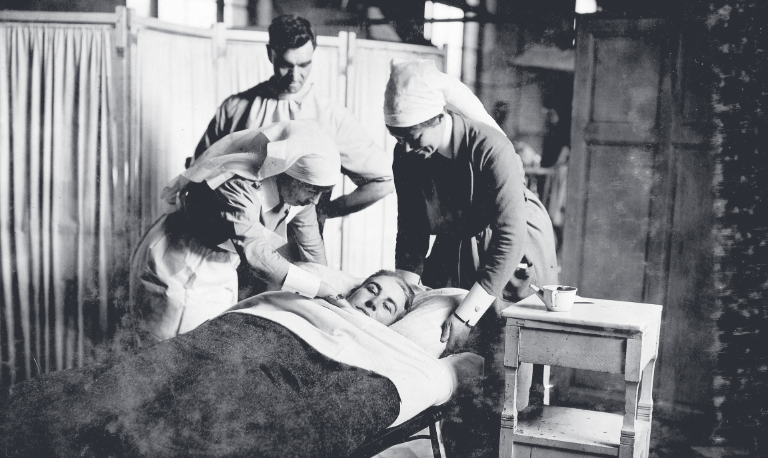
Two Canadian nurses caring for wounded soldiers inside a casualty clearing station during the First World War, 1918, from the George Metcalf Archival Collection at the Canadian War Museum.
With generous funding from Veterans Affairs Canada, I-Think partnered with educators Ian Duncan and Michael Alex to highlight the 2SLGBTQ+ and Women Veterans and those impacted by the First and Second World Wars.
The Women and 2SLGBTQ+ focus reflects I-Think’s ongoing commitment to many remarkable possibilities. In our Remembrance Day Challenge Kit, students are invited to see themselves as participants in remembrance, with a responsibility to:
Expand the experiences we honour and remember
Deepen our learning to add complexity to those experiences
Be historically accurate in our remembering
This Challenge Kit and accompanying materials designed by I-Think and Ian Duncan intend to transform Remembrance Day from a passive ceremony into an active learning experience.
The resource features four Activity Plans on the themes of:
2SLGBTQ+ and Enlistment in the First World War
2SLGBTQ+ Discovered in WWII
Women, War and Service
2SLGBTQ+ and Allyship
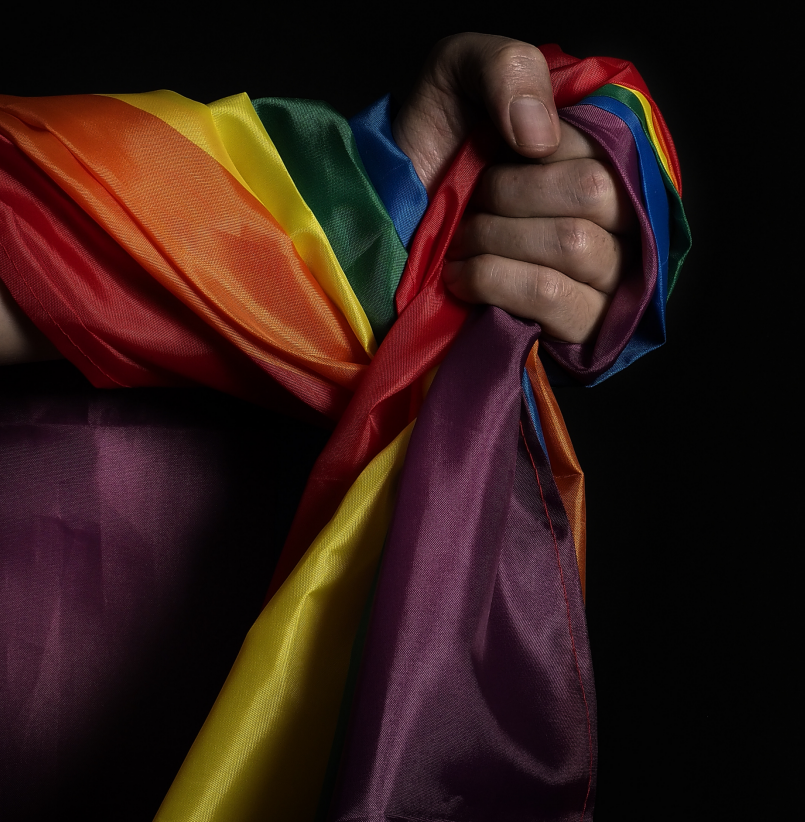
A report by the LGBT Purge Fund (2023) documenting the historical persecution of 2SLGBTQ+ individuals in Canada’s military, RCMP, and federal public service, and ongoing efforts toward recognition and reconciliation.
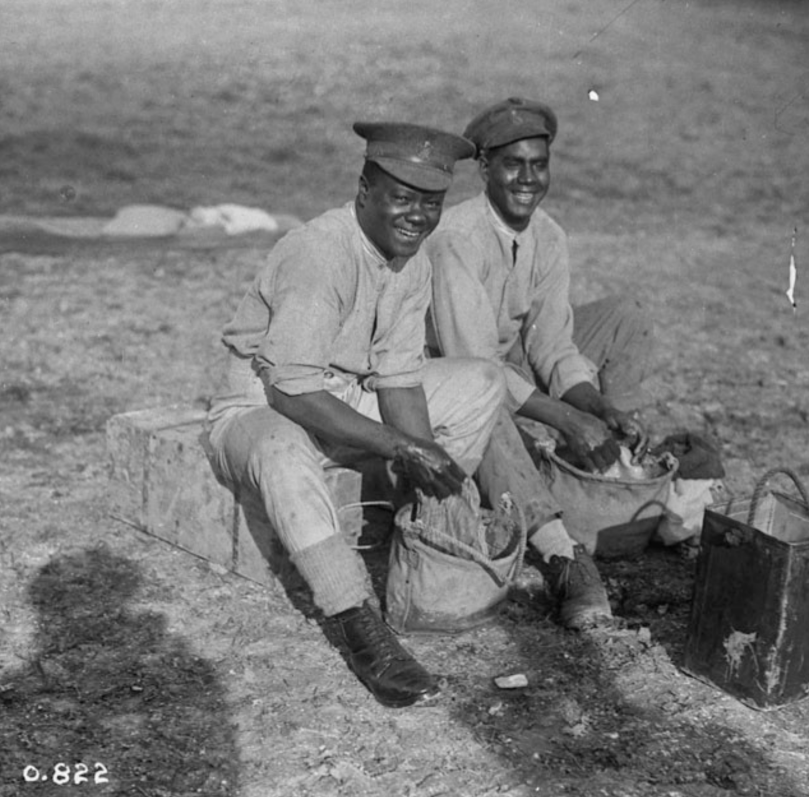
Students learn about queer Canadians who were nurses, farmhands, mechanics, entertainers, and soldiers who answered Canada’s call to serve. Len Keith and Joseph “Cub” Coates enlisted from rural New Brunswick and served overseas with the Canadian Engineers. Students examine how their love had to remain discreet in a country whose laws criminalized it, even as that same country depended on their labour and loyalty.
The case of Nursing Sisters Ellanore Parker and Murney Pugh weaves together women’s service and 2SLGBTQ+ identity. Both served Canada overseas as medical professionals, caring for soldiers wounded at battles such as Vimy Ridge and suffering the effects of poison gas exposure themselves. Students explore how women’s military service was both indispensable and constrained, and how Parker and Pugh’s later life together challenges assumptions about gender, sexuality, and respectability in early twentieth-century Canada.
One of the activities, situates all of this within a broader examination of women’s contributions to Canada’s war efforts since 1914. Students research military nurses, women in industrial labour, the Canadian Women’s Army Corps, and the gradual integration of women into combat roles. Using an intersectional lens, they examine how Indigenous women, racialized women, working-class women, and queer women experienced service and recognition differently, revealing that “women’s service” itself is not a single story.
Ross Hamilton’s story further exposes the tension between celebration and exclusion within Canadian military culture. As a Nova Scotian performer with the Dumbells troupe, Ross brought humour and morale to Canadian troops during the First World War. Yet in the Second World War, he was quietly discharged because of his sexuality. Students are asked to grapple with how the same nation can honour service in one moment and erase the individual in another.
Students also examine the LGBTQ+ Purge and Canada’s response through apology, reparations, and memorialization. They analyze how the Canadian state has acknowledged harm and consider what responsibility citizens hold in shaping remembrance that is honest rather than comfortable.
Together, these activity guides position Remembrance Day as an ongoing Canadian project. Students learn that remembrance is not only about honouring the fallen, but about deciding who is visible in our national memory. By interweaving women’s service and 2SLGBTQ+ experiences into Canada’s military story, I-Think helps bring historical accuracy and criticality to remembrance.
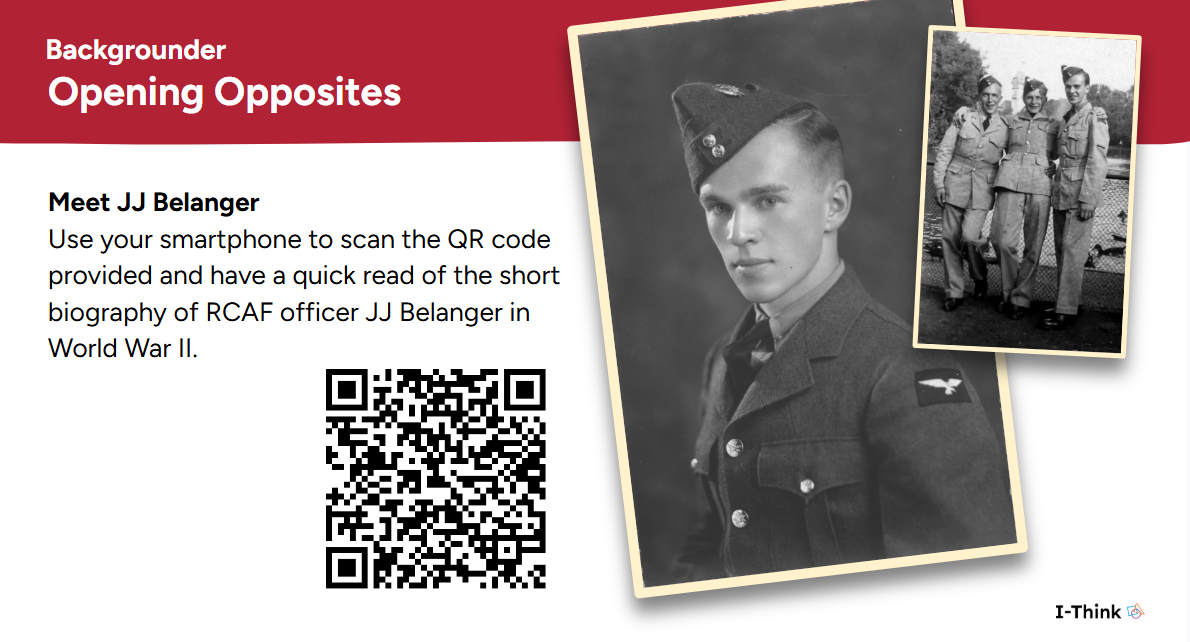
A sample of the slide deck resources included in the Remembrance Day Challenge Kit.
Activities designed by:
Ian Duncan
Ian Duncan teaches high school history in Ontario, working hard to create a classroom where historical narratives are questioned, inclusive, and co-created by new generations of young people. Charged with critical thinking, fuelled by dialogue and, amplified by curiosity, his students engage in inquiry that truly reaches into the past. He lives proudly with his husband and son in Toronto, is always learning new stories from the past, and also writes picture books found in your local library and bookshop.
Michael Alex
Michael Alex is a Teacher Coach with I-Think and a former high school teacher with a quarter century of classroom experience and instructional leadership, primarily in the public alternative system. Today he’s a freelance learning strategist at Inside Out Learning working through a mindfulness lens to support teens inside and out of traditional learning environments.
